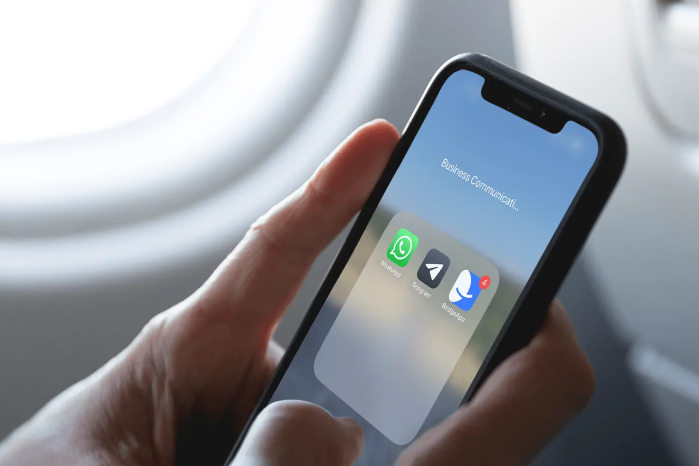
In the interconnected landscape of the 21st century, the tools we choose for international communication are critical for maintaining personal bonds and professional collaborations across borders. Two platforms frequently dominate this conversation: the universally recognized WhatsApp Web and the powerhouse often referred to as Telegram Chinese, a nod to its robust adoption in markets like China and among global diaspora communities. This comparison delves into their core functionalities, security philosophies, and suitability for diverse international needs.
Accessibility and Cross-Platform Integration
The entry point for millions into desktop messaging is undoubtedly WhatsApp网页版. As a browser-based mirror of the mobile app, its strength lies in seamless simplicity. For users whose international contacts are overwhelmingly on WhatsApp, the transition from phone to computer is effortless, facilitating easy file sharing and typing during work hours. Its requirement for a constant phone connection, however, can be a limitation in areas with poor mobile service.
Conversely, Telegram Chinese users benefit from a fundamentally independent cloud-based architecture. Telegram’s standalone desktop and web applications do not require a connected smartphone, offering true multi-device independence. This is a significant advantage for international travelers or those who frequently switch between devices. The platform’s accessibility in regions where other apps are restricted also contributes to its status as a vital Telegram Chinese tool for unfiltered cross-border dialogue.
Feature Set for Group Dynamics and Information Sharing
When scaling communication to groups and large communities, the divergence between these platforms becomes stark. WhatsApp Web supports group video calls up to 32 participants and communities that link related groups under one umbrella. These features are continually evolving but often feel like cautious extensions of its private chat core.
The Telegram中文 ecosystem, however, is built for scale and public discourse. Channels can broadcast to unlimited subscribers, functioning like a social media feed directly within the app. Groups can host up to 200,000 members with advanced administration tools, polls, quizzes, and bots. For international professional networks, academic circles, or large diaspora communities, Telegram Chinese offers a far more powerful suite for organized, mass communication. The WhatsApp Web interface, while clean, cannot match this depth for public or large-scale interactive communication.
Security, Privacy, and the Encryption Debate
Privacy is a paramount concern in international communication. WhatsApp Web employs end-to-end encryption by default for all chats and calls, a feature that extends to its web client. This is a strong, non-negotiable security model that ensures only the communicating users can read the messages. However, its metadata (like who you talk to and when) and its backup strategy (if using cloud backups) present potential points of scrutiny.
Telegram Chinese uses a different, more flexible model. Its signature feature is Secret Chats, which are device-specific, end-to-end encrypted conversations with self-destruct timers. However, regular cloud chats on Telegram Chinese are not end-to-end encrypted by default, allowing for accessible multi-device syncing but placing trust in Telegram’s server-client encryption. This model, combined with its open API and bot ecosystem, offers a blend of optional ultra-privacy and high functionality that appeals to users with varied threat models.
See also: How Technology Is Transforming Everyday Life
File Sharing and Media Capabilities
The practical need to share documents and media across continents is another key differentiator. WhatsApp Web allows file shares up to 2GB, a recent and welcome increase. It supports a wide range of formats directly in the browser, making it sufficient for most everyday international exchanges. Telegram Chinese once again pushes the limits, allowing files up to 2GB per file and storing them without compression in its cloud. This makes it exceptionally powerful for sharing high-resolution media, lengthy documents, and even compressed folders. The ability to access this media history from any device without local storage makes Telegram Chinese a superior tool for collaborative projects where large files are exchanged regularly, a common need in international work.
Conclusion
The choice between WhatsApp Web and Telegram Chinese for international communication is not about declaring one universally superior, but about aligning tools with specific needs.
WhatsApp Web is the ideal choice for those seeking simplicity, universal accessibility, and default end-to-end encryption for most personal and professional contacts. Its strength is in its ubiquity; if your goal is to connect effortlessly with a broad international network that is already on WhatsApp, WhatsApp Web provides a reliable, secure, and straightforward bridge. It remains the lowest common denominator for global chat. For power users, large communities, and those prioritizing feature-rich, scalable communication, Telegram Chinese stands out. Its cloud-native design, monumental group and channel capacities, superior file-sharing capabilities, and flexible privacy options make it a versatile platform for managing complex international networks, information channels, and collaborative projects. It is less a simple messaging app and more a comprehensive communication ecosystem.